Key Takeaways
- smartTOS is a modern, modular Terminal Operating System designed for intermodal terminals.
- It digitalizes and optimizes all core processes, from yard management and train dispatching to truck handling.
- Terminals benefit from measurable improvements such as shorter turnaround times, better resource utilization, and higher data quality.
- smartTOS is eFTI-ready and built on more than 25 years of experience in digitalizing intermodal terminal operations.
What is smartTOS?
smartTOS is not a conventional software tool. It is an integrated operating system for terminal processes.
It has been developed to digitally map the operational reality of intermodal terminals while making it fully controllable. Instead of isolated standalone solutions, smartTOS consolidates all relevant workflows into one centralized system and makes them available in real time.
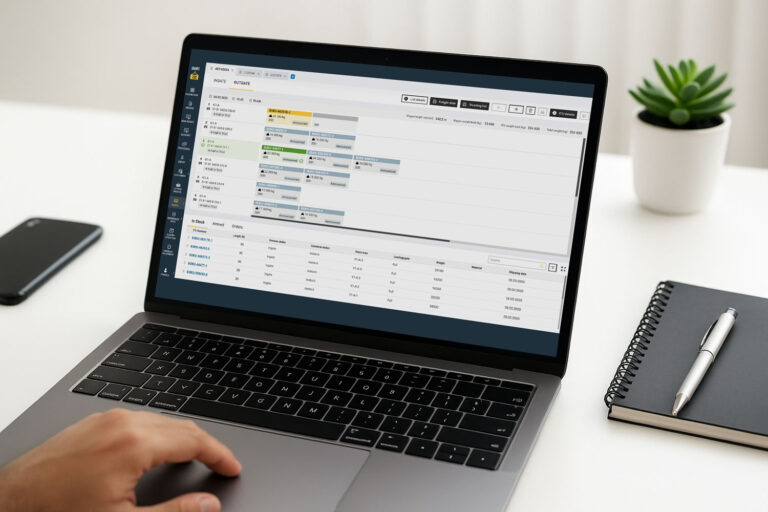
The CORE module coordinates processes such as train dispatching, yard and space management, lifting and transshipment activities, as well as gate and truck operations. Additional modules can be flexibly added, allowing terminals to digitalize step by step – aligned with their actual needs and without requiring a complete system replacement.
A key element of smartTOS is its consistent, end-to-end data foundation. Operational data is not only captured but also made usable for reporting, performance analysis, and integration with external partners. The system architecture supports both SaaS operation in an EU cloud environment and on-premise installations for terminals with high security and availability requirements.
Why smartTOS?
Intermodal terminals are critical hubs within modern supply chains. At the same time, they face increasing pressure: rising handling volumes, more complex processes, tighter time windows, and growing regulatory requirements.
Yet in many terminals, core processes are still managed manually or only partially digitalized. This results in media disruptions, increased coordination efforts, and limited scalability.
smartTOS addresses these challenges by fully digitalizing and interconnecting operational processes. The focus is not on isolated features but on creating a stable, expandable structure for daily operations.
smartTOS offers terminals:
- Digital Processes: Replacement of paper-based workflows with real-time control and system-supported dispatching.
- Scalability: Modular expansion as traffic volumes grow or new requirements emerge.
- Transparency: A centralized overview of movements, loading units, vehicles, and resources.
- Data Foundation for Sustainability: Use of structured data to support more efficient and CO₂-relevant decision-making.
- Regulatory Compliance: Support for standardized, eFTI-compliant data flows.
The Benefits of smartTOS
The advantages of smartTOS become particularly clear when comparing typical terminal challenges with a fully digitalized system. Its modular structure enables tailored implementation – without rigid system boundaries or complex customization projects.
Terminal Challenge
With smartTOS
Benefit
Manual train dispatching
System-supported, partially automated dispatching with real-time status
Typically reduces manual planning efforts by 20–40%
Paper-based yard management
Geo-based yard management & mobile data devices
Real-time visibility, improved space utilization
Long waiting times at gates
Truck self-check-in & OCR gates
Reduced gate turnaround times
Lack of data integration
Standardized interfaces, eFTI-ready
Higher data quality, fewer manual errors
Growth & scaling challenges
Modular expansion
Adaptation to increasing volumes without system replacement
smartTOS as the Foundation for a Digital Terminal Future
smartTOS provides the technological foundation for connected, data-driven terminal operations. Processes, data, and partners are integrated across the entire intermodal logistics chain and consolidated into one shared system landscape.
This makes operations more transparent, more controllable, and sustainably scalable. Terminals gain a digital infrastructure that increases operational efficiency, conserves resources, and ensures regulatory compliance.
With smartTOS, terminals evolve into active, integrated building blocks of a digital logistics chain – modular, reliable, and future-proof.